Q&A with Candy Siekmann: Farming for the Future
ADM is advancing the global shift towards sustainable food production systems, with a focus on leveraging regenerative agriculture to drive value throughout the supply chain. As a leader in developing innovative solutions from nature, ADM starts by supporting farmers with solutions that improve soil health, reduce emissions and strengthen biodiversity, supporting the long-term viability of our food systems.
As the Director of Climate Smart Ag Origination, Candy Siekmann is leading the charge in regenerative agriculture across Europe, with a farmer-first approach that provides financial and technical support to cultivators adopting an outcome-based approach which protects and improves soil health, supports sustainability outcomes and creates greater value for farmers. Since the start of ADM's global re:generations™ program in the United Kingdom and Poland in 2023, Candy has supported the enrollment of more than 160,000 acres (approximately 65,000 hectares) in the program across key agricultural regions in Europe, contributing to the growing body of results and learnings highlighted in ADM’s 2025 Regenerative Agriculture Report.
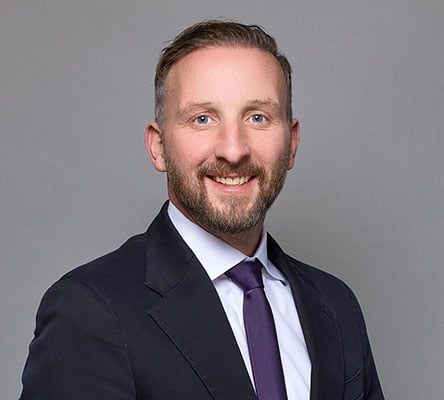
Candy managed ADM's European Grains and Oilseeds origination and terminal/elevator business for over ten years before the opportunity arose to lead a new initiative in regenerative agriculture through re:generations™. He is passionate about working across ADM's partnerships to secure supply chain resiliency, while supporting ADM's goals of reducing its Scope 3 emissions. Candy sees how his work through ADM plays an essential role in global sustainability innovations, and his sense of purpose comes from knowing this work supports not only the future of his family, but also the futures of generations to come.
What drew you to sustainability and regenerative agriculture? How has your background shaped your approach to working with farmers and partners across the EMEA value chain?
I first joined ADM in Hamburg, Germany, working at an oilseeds production site during my studies. I have worked across ADM’s numerous departments and locations throughout my career before starting my work with regenerative agriculture. What drew me to sustainability and regenerative agriculture is the belief that agriculture can be both productive and restorative – that farmers can be at the center of solutions that holistically benefit the environment, rural communities and the food system.
Agriculture is often seen as part of the challenge when it comes to climate change and carbon emissions. But I also see that as an opportunity: when something is part of the problem, it has the potential to become an important part of the solution.
My background has shown me that meaningful change happens when we combine ambitious sustainability goals with practical, farmer-focused solutions. Working across diverse markets and global value chains taught me the importance of listening first, understanding local realities and building long-term partnerships based on trust and shared value.
My approach is to connect farmers, agribusinesses and value chain partners around opportunities that improve resilience, alongside profitability and environmental outcomes. Regenerative agriculture is not a one-size-fits-all journey, and I’m passionate about helping create pathways that work for farmers while delivering measurable impact at scale—and helping our downstream customers meet their sustainability goals while responding to growing consumer demand for more resilient and sustainable food systems.
ADM has been advancing regenerative agriculture programs globally and across EMEA. What progress or milestones have you observed, particularly when it comes to engaging and supporting farmers on the ground? What are some of the most encouraging signals of long-term adoption?
The greatest progression thus far has been seeing regenerative agriculture move from individual pilots to a scalable reality across EMEA. The program has gained momentum since starting in the UK and Poland in 2023 and has since expanded to agricultural regions across countries including Serbia, Germany and Hungary.
The most encouraging milestone is not just the number of hectares enrolled, but the level of farmer commitment. When farmers continue practices beyond the initial program, share experiences with their peers and start integrating regenerative approaches into their overall farm strategy, that’s when real transformation happens. The strongest signals of long-term adoption are farmer-led innovation, measurable improvements in soil health and the growing collaboration across the value chain. It’s inspiring to see farmers, customers and partners working together toward a common goal, and creating agricultural systems that are more productive, resilient and sustainable for future generations.
Farmer participation is critical to scaling regenerative practices. From your experience, how are farmer experiences and feedback shaping how these programs evolve – particularly at ADM? What challenges and opportunities do they talk about most?
Farmer feedback is at the heart of how regenerative agriculture programs evolve. What we consistently hear is that farmers want solutions that are practical, flexible and economically viable. They are looking for approaches that fit their local conditions, help manage risk and support long-term farm resilience.
These conversations help shape everything we do from program design and technical support to data collection and incentives. Farmers' experiences remind us there is no one-size-fits-all approach, and successful programs need to meet farmers where they are and provide a clear pathway for continuous improvement. The biggest challenges farmers talk about are managing the transition, navigating weather and market uncertainty as well as balancing short-term costs with long-term benefits.
At the same time, they see significant opportunities in improving soil health, strengthening resilience, reducing input dependency and creating new value through sustainable supply chains. What inspires me most is innovations that are driven by farmers themselves. When they start sharing their success with their peers and adapting practices to their own operations, regenerative agriculture becomes more than a program and part of the farm’s future strategy. That farmer-led momentum is one of the strongest indicators that adoption will continue to grow and deliver lasting impact.
For example, the experiences of farmers in Hungary and Germany enrolled in ADM's re:generations™ program show how long-term relationships can turn conversations about sustainability into practical changes in the field.
In Hungary, two farmers were already exploring ways to respond to unpredictable weather, soil challenges and rising input costs when ADM's re:generations™ program provided additional technical support and incentives. One farmer has moved from reduced tillage toward no-till trials, while another has eliminated stubble cultivation across 1,400 hectares and reduced diesel consumption by 15%. In Germany, a farmer who had already committed to soil conservation before joining re:generations™ has continued building on those efforts with practices including cover crops and more diverse crop rotations
These experiences illustrate why trust and ongoing collaboration matter. When farmers can test new approaches, see how they perform under their own conditions and adapt them over time, regenerative practices can become part of how a farm operates – not simply a short-term initiative. ADM's direct connection with farmers helps create the confidence and practical experience needed to support broader, longer-lasting adoption.
Partnerships and technology are often key enablers in this space. Can you share examples of how ADM is working with partners or leveraging new technologies to make agriculture more practical, scalable and measurable for farmers?
Partnerships and technology are essential to making regenerative agriculture work at scale, exemplified by our partnerships with Bayer and Klim. No single organization can drive this transformation alone.
Bayer's agricultural technology helps agronomists simplify data collection, track practice adoption and measure environmental outcomes more efficiently, paired with extensive experience and close connections to regional farmers. Klim, strategic tech partner providing more localized support for sustainable farmers in Germany, has offered dynamic feedback on existing technology, and supplied fresh perspectives on innovations that can support the shift from conventional to regenerative farming practices.
With Klim, we knew we needed a partner who could bring both strong technical capabilities and a deep understanding of the local farming landscape. Not only did Klim offer an advanced digital platform that allows farmers to simulate practice changes and manage data collection efficiently, but they also had a sizable in-house agronomic team to provide hands-on-support. That combination – tech-enabled tools and real agronomic guidance – is critical to how ADM structures its programs. Klim is also uniquely flexible and aligned with ADM’s regional specific goals. As a dynamic, startup-style company, they adapted their operating model to fit ADM’s approach for Europe. Just as importantly, they understand ADM’s broader philosophy that regenerative agriculture needs to benefit farmers, not just the supply chain.
The use of these digital tools, remote sensing and data analytics have made it easier for farmers to participate, monitor progress and demonstrate the impact of regenerative practices without adding unnecessary complexity to their operations. These innovations are creating greater transparency and trust across the value chain, where farmers can receive more targeted support, customers can gain confidence in measured outcomes and partners can work together to scale impact more effectively.
However, the goal is not simply to use technology for technology’s sake. It’s using the right tools and partnerships to make regenerative agriculture more accessible, more rewarding and more scalable for farmers. When we combine farmer expertise with innovation and strong collaboration, we can accelerate progress toward a more resilient and sustainable agricultural system.
Looking ahead, what excites you most about the future of regenerative agriculture and farming overall in EMEA, what will it take to scale these opportunities to ensure they are both beneficial and economically viable for farmers, as well as environmentally meaningful?
What excites me most about the future of regenerative agriculture in EMEA is the growing momentum across the entire value chain. Farmers, food manufacturers and retailers, policymakers and consumers are increasingly aligned around the need for agricultural systems that are both productive and resilient.
Agricultural resilience has now become a core strategy for producers. We're moving beyond the question of why regenerative agriculture matters and focusing on how to scale it effectively. Scaling regenerative agriculture will require practical solutions, strong agronomic support, trusted partnerships and business models that reward farmers for the value they create. Economic viability is essential, and sustainability and profitability must go hand in hand.
I'm optimistic because we are seeing greater collaboration, better tools to measure outcomes and increasing demand for lower-carbon, more resilient and sustainable supply chains. When we combine farmer expertise with innovation, market incentives and long-term commitment across the value chain, we can achieve outcomes that are both environmentally meaningful and economically sustainable.
The future of agriculture is not about producing more with less, but about producing more value, building resilience, restoring natural resources and creating opportunities for future generations of farmers. That is an incredibly exciting journey, which I am proud to be a part.
Learn more about ADM's re:generations™ program in its 2026 Regenerative Agriculture Report here.