A Model for Regenerative Agriculture Takes Root in Germany: Connecting Farmers to Growing Market Demand
Across Germany, farmers are demonstrating how regenerative agriculture – combined with the right support – can deliver measurable business outcomes, unlock greater environmental impact, and open up new market opportunities that meet growing customer demand for sustainable sourcing. Through ADM's re:generations™ program, these producers are building on a strong sustainability foundation, using targeted support to strengthen long-term farm resilience, reduce greenhouse gas emissions, and connect their crops to evolving market and consumer needs.
Fifteen farmers, with fields spanning approximately 25,000 hectares, including 14,000 hectares of wheat, and rapeseed, were carefully selected for their advanced approach to sustainable agriculture. Even before joining the program, their emissions intensity was considerably lower than German national benchmarks. This strong starting point created an ideal environment to test how the right combination of tools, incentives and expertise could accelerate further progress and strengthen their position in a changing marketplace.
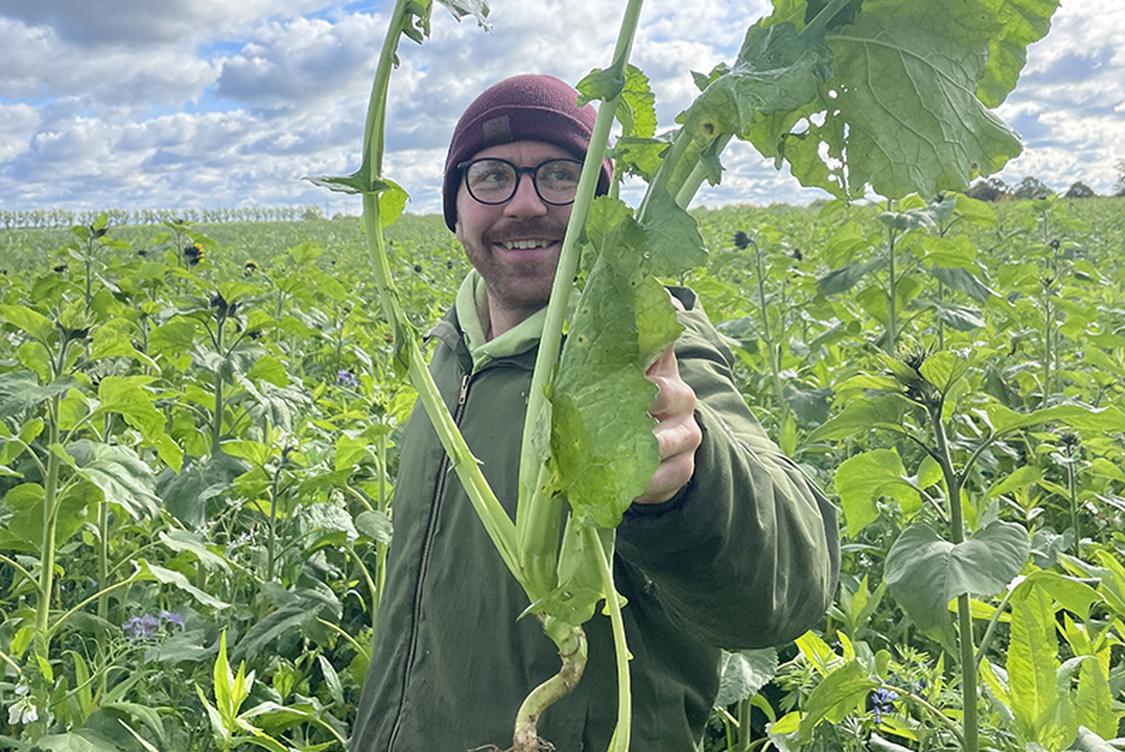
"My goal is to build a system that can handle both environmental and economic pressures," says Wilhelm Zahn, a farmer from the Brandenburg's Uckermark region in Germany. "Healthy soil is the foundation of everything we do, and every season is another chance to build more resilience. The re:generations™ program is a great incentive to try practices like cover crops or reduced tillage and put them in place across as much land as possible."
Since enrolling, farmers have continued to build momentum. By 2025, wheat grown within the program achieved emissions 33% lower than the German national benchmark. Rapeseed results were similarly compelling, with emissions reduced to 39% below the national average. These outcomes underscore the effectiveness of regenerative agriculture practices, as well as validate the value of what is possible when experienced farmers are equipped with tailored support, robust data and additional resources to deliver meaningful environmental outcomes.
At the same time, the program prioritized a farmer-centric approach, with a focus on flexibility and collaboration. ADM, in partnership with agritech company Klim, provided a comprehensive regenerative agriculture "toolbox," combining data-driven insights, digital platforms and on-the-ground expertise. Every farm was onboarded digitally, supported with field-level data collection and soil sampling, and received in-person visits to assess practices and identify opportunities for improvement — ensuring that the environmental benefits achieved on-farm also translate into value across the wider supply chain.
On the ground, regenerative agriculture practices such as cover cropping, undersowing and reduced tillage gained traction across participating farms. Cover crop mixtures now dominate, with increasing interest in more diverse blends to enhance biodiversity and soil health. Undersowing, in particular, has seen significant uptake, with several farms emerging as case studies for successful implementation. These improvements not only enhance soil and ecosystem health but also strengthen the long-term competitiveness of participating farms by aligning production with the growing market for sustainably produced crops.
A hybrid incentive model – combining practice-based and outcome-based payments – has been well received, though farmers have expressed interest in further refinement to better reflect the complexity of certain practices.
The program has also highlighted key challenges that will shape its next phase. Access to specialized machinery remains a barrier to reducing tillage, while synthetic fertilizer use continues to be a primary driver of emissions. Additionally, simplifying data requirements and onboarding processes – especially for farms with complex structures – will be critical to scaling adoption.

"Looking ahead, we're focused on building a scalable model that aligns farmer needs, business objectives and environmental outcomes," said Candy Siekmann, ADM's Director of Climate Smart Agriculture in EMEA. "This includes refining incentive structures, expanding crop coverage and enhancing digital platforms to turn measurement data into actionable insights that connect regenerative practices to tangible market value."
To broaden impact and test regenerative practices across diverse cropping systems, the program will also explore adding new crops while continuing to adapt tailored technical support based on farmer feedback and evolving environmental conditions. By linking on-farm progress with downstream customer needs, ADM is helping create a more connected, resilient, and market-responsive agricultural system.
"Ultimately, the experience in Germany underscores that even the most advanced farms can benefit from the right combination of support, data and incentives," continued Siekmann. "By meeting farmers where they are and helping them build on existing strengths, our re:generations™ program is not only driving measurable emissions reductions today – it is also creating a scalable, resilient model that will support long-term growth of regenerative agriculture and the market demand that fuels it across Europe."
To learn more about ADM's re:generations™ regenerative agriculture program, visit https://www.adm.com/en-us/sustainability/regenerative-agriculture/.