Exploring European Consumer Perspectives on Regenerative Agriculture
Interest in regenerative agriculture is rising across Europe, and consumers increasingly pay attention to how their food is produced, ultimately creating new opportunities for brands to connect sustainability with the everyday choices consumers make. ADM's newest proprietary research explores consumer perceptions of regenerative agriculture in Europe – specifically across the United Kingdom, Germany, France, the Netherlands and Poland.
The research reveals that awareness of regenerative agriculture is growing – even if many consumers are still learning what the concept means in practice. For brands, the gap between awareness and understanding represents an opportunity to educate consumers, build trust and differentiate products in a marketplace where sustainability is influencing how consumers view the products they purchase and what they ultimately buy.
"Regenerative agriculture resonates deeply with today's consumers. While understanding is still developing, a strong foundation of positive perceptions are already in place," said Paula Labine, Sustainability Marketing Director, ADM. "Brands can leverage and strengthen these associations with authentic storytelling that educates and inspires consumers, moving them from awareness to action. For companies that invest in messaging, the opportunity is not just to meet expectations but to help define the future of food."
Awareness is growing, but understanding is still developing
Across the five European countries surveyed, there is a consistent awareness gap, with many consumers saying they have heard of regenerative agriculture, but with few indicating they're somewhat or very familiar with what the term actually means.
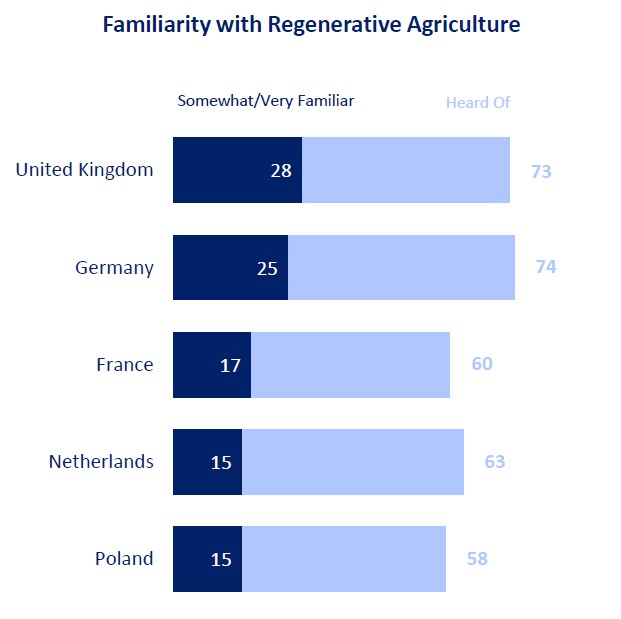
Consumers in the United Kingdom (73%) and Germany (74%) report the highest levels of having heard of regenerative agriculture, while awareness is somewhat lower in France (60%), the Netherlands (63%) and Poland (58%). Compared with other sustainability concepts – such as organic farming or net-zero and low-carbon agriculture – regenerative agriculture remains less widely understood and reinforces the need for clear explanation of how regenerative practices fit into a broader sustainability conversation.
Despite limited familiarity with terminology, many consumers already recognize the practices and outcomes associated with regenerative agriculture. Concepts like crop rotation, and outcomes like soil health and biodiversity are widely understood, and when consumers learn how regenerative practices contribute to environmental sustainability and food production, their interest in purchasing related products increases significantly.
Gen Z and Millennial consumers show higher levels of familiarity with regenerative agriculture than older generations and are more likely to prioritize environmental and social impact when choosing food products. Younger consumers are increasingly making sustainability part of the buy decision. For brands, regenerative agriculture presents an opportunity to shift from back-end practice to a front-of-pack story. This generational shift suggests that sustainability messaging, including regenerative agriculture and interest in sustainable farming practices, will continue to grow in importance over time.
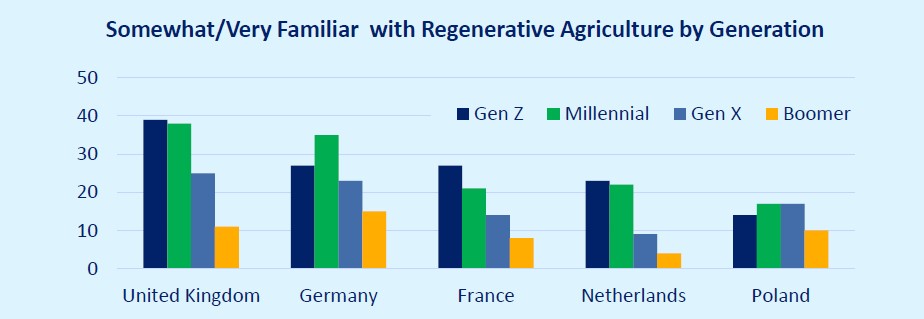
This sentiment signals a pivotal moment for brands to lead with education and engagement with consumers. Younger demographics, in particular, are primed to support products that demonstrate their support for regenerative agriculture with clear and authentic storytelling.
Positive perceptions create a strong foundation
Even among consumers who are still learning about regenerative agriculture, sentiment toward the concept is overwhelmingly positive.
For example, 75% of respondents in Poland and 73% of respondents in the UK and Germany believe regenerative agriculture improves soil health. UK respondents also showed high interest in protecting food supplies for future generations (74%) and believe regenerative agriculture practices help farms become more productive and resilient (72%). These perceptions reflect broader consumer belief that regenerative agriculture is connected to restoring ecosystems and supporting the long-term sustainability of food systems.
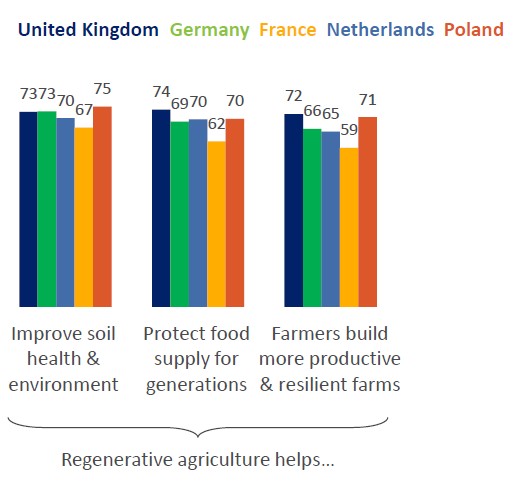
At the same time, when asked to describe regenerative agriculture in their own words, many consumers associate it with ideas such as restoring land, improving biodiversity and producing food in ways that support both people and the planet.
"Consumers increasingly view regenerative agriculture as a win-win for solution that prioritizes environmental restoration and agricultural viability – linking soil health directly to long-term farm productivity and resilience," said Candy Siekmann, Director Climate Smart Origination, EMEA, ADM. "This shift suggests that consumers no longer see environmental health and food productivity as competing interests, but rather as interdependent components of a sustainable system. By defining the practice through its benefits to biodiversity and the planet, the public is moving toward a more holistic understanding of how our food systems should function."
Additionally, there is a perception that many consumers believe ingredients grown using regenerative practices are healthier, more nutritious, taste better and make them feel better about what they are eating. When regenerative agriculture is explained in clear terms, consumers often consider it just as important or more important than attributes such as brand name, product appearance or convenience when choosing food and beverage products.
"These positive perceptions open storytelling opportunities for brands by connecting regenerative agriculture to the outcomes consumers already care about and create compelling narratives that resonate at the shelf, including food quality, environmental protection and long-term food security," said Labine. "Every message in ADM's survey tested successfully and drove consumer action, whether the focus was soil health, farmer support, or long-term sustainability. Because regenerative agriculture resonates so broadly, brands have the creative flexibility to craft authentic stories that can boost purchase intent."
Clear labeling can drive purchase decisions
The survey also demonstrates how regenerative agriculture messaging can directly influence buying behavior. When EMEA consumers were shown products with regenerative agriculture messaging on the packaging, 81% of UK, 78% of German, 76% of Polish, 75% of French and 63% of Dutch consumers said they would purchase the product.
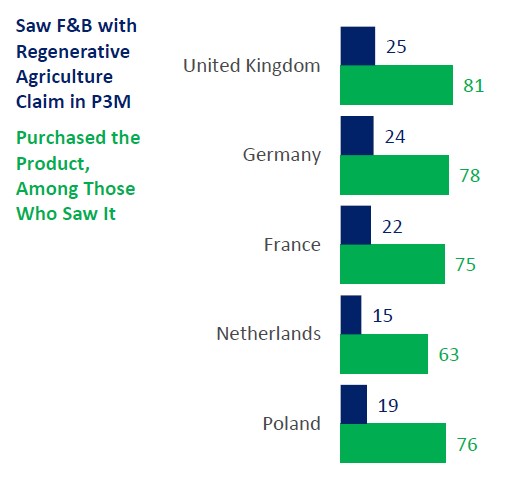
For many consumers, packaging remains one of the most influential sources of product information. Straightforward storytelling explains how regenerative practices benefit the environment; farmers or food quality can help brands stand out in a crowded marketplace.
Turning momentum into action
In Europe, regenerative agriculture is moving from a niche agricultural concept into a meaningful consumer conversation. Awareness is growing, positive perceptions are already established, and younger generations are particularly eager to support sustainable food systems.
By helping consumers better understand regenerative agriculture – and by clearly communicating commitments to farmers and regenerative practices – companies can strengthen trust, differentiate their products and align with evolving consumer expectations, turning curiosity into connection and connection into action.